Is self-criticism an effective form of motivating ourselves to be a better person? Most of us assume so. We need to rein ourselves in or kick ourselves into gear, or we won’t accomplish anything. Most self-criticism I work on with clients is more destructive than constructive. It is a fear that eats away at us: “If people really knew me, they wouldn’t like me.”
We all have a side we don’t want anyone to see. I thought I was hiding mine pretty well until one day in my first year of college. I was working hard to balance grades, work, family, and friends. I slid into my “Connections” class, a mandatory first-semester, first-year course to help you get oriented to your department and reduce the freshman dropout rate. The different departments have a lot of leeway in what they cover, and our social work professor/mentor that day decided that, as social workers, we needed deep inner reflection. They gave each of us a piece of paper and had us write down everything we don’t like about ourselves for 5 minutes. My busyness fell away as the blank paper stared me down, and my confidence gave way to the voice that I had been trying not to listen to for a long time. There’s the petty stuff, right, like not being skinny enough or having clear enough skin. But your inner critic, like mine, probably doesn’t stop there, and before I knew it, I was writing down things I hadn’t realized I had been judging myself for. I don’t remember exactly what I wrote; I remember the feeling more. Something like that feeling when you look into your own eyes in the mirror for a little too long, and you don’t like what you see.
The exercise didn’t stop there; we were then tasked to respond to what we had written from the perspective of a friend. A benevolent entity that sees all of you. Just as the harshness of what I wrote had surprised me, so did the loving kindness of the things I started writing next. This was my first structured interaction with the concept of self-compassion, and it was transformative for me. Since then, I have been on both sides of the question many times, as both a therapist and a client: “What would you tell a friend if they told you what you just said?” This question often follows a “should” statement or a feeling of being unlovable. But I know from being a client that this question does not feel so simple on the receiving end; you see, our inner critic always has an ace up its sleeve: “Other people don’t know what you’re really like.” And it is right; most people don’t know what makes you tick; what you fear most or want most. I’ve written before about how being seen is transformative, and letting other people see you is a great place to start. But I’m also happy to tell you that you don’t have to wait for a parent, family member, or spouse to become loving and supportive for you to start healing. Imagining a friend’s response, praying to a higher power, or even journaling back and forth to yourself lets you zoom out and see yourself from another point of view.
I didn’t lose all my imperfections as a result of a 10-minute writing exercise. So how did it transform me, and why did I feel so much better afterward? Kristen Neff’s Self-Compassion Letter exercise, which my mentor used, doesn’t shy away from what we don’t like about ourselves; it leans into it and changes our perspective on ourselves. This perspective change is where the power lies. When we are too enmeshed in our perceived inadequacies to see ourselves clearly, everything feels hopeless, and we feel stuck. When we connect to our capacity for compassion, through relationships, spirituality, or self-reflection, things start to shift.
What parts of yourself do you find hardest to love?
What could happen if you took the time to turn towards those parts with compassion?
Stay curious,
Laura Danese
PS. Here’s the exercise if you want to give it a whirl. Imagine, what if the love you fought to feel was always free?
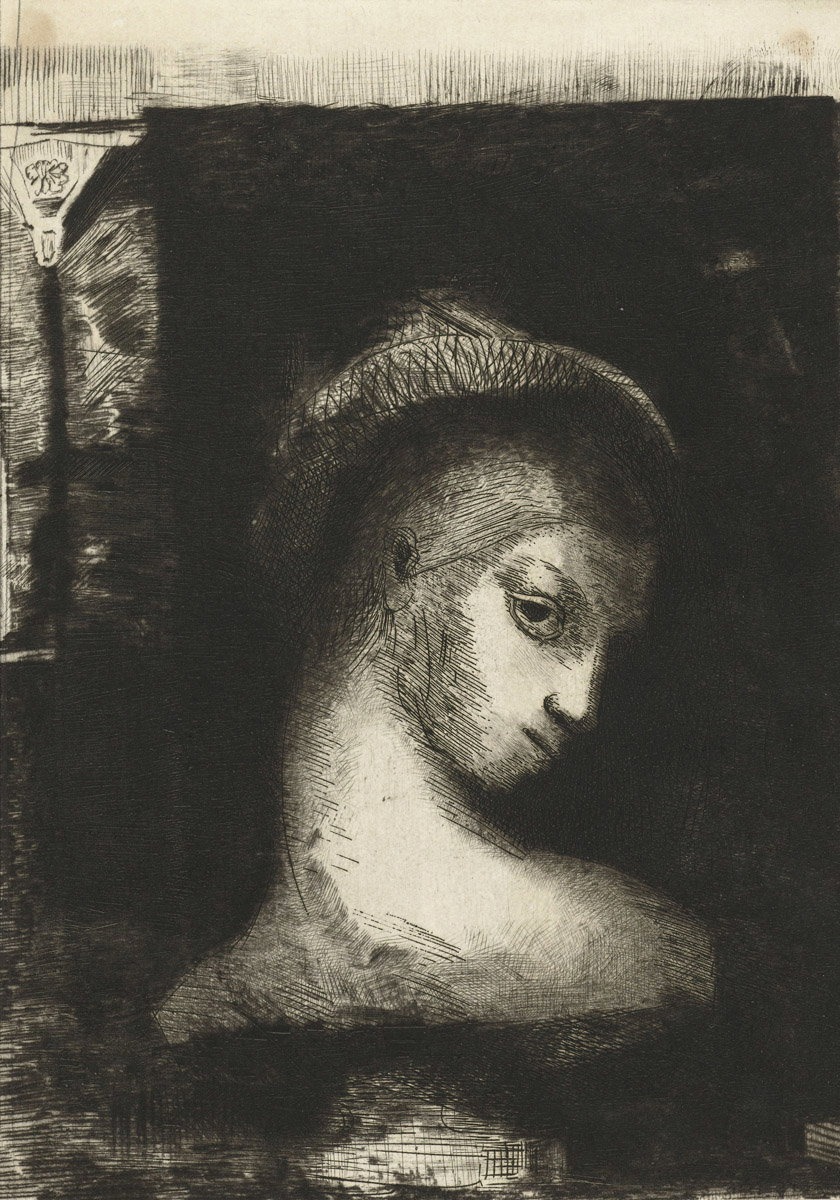
Photo Credits: Image sourced from the Public Domain Image Archive / Rijksmuseum, Perversion, Odilon Redon, 1891
Leave a Reply